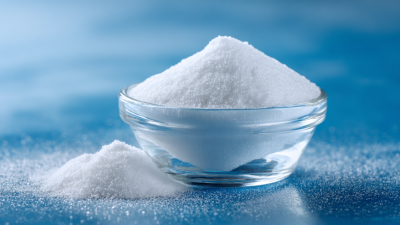
High Molecular Weight Polyacrylamide, or HMWPAM for short, has been catching quite a bit of attention across different industries lately. People really appreciate its unique qualities—like how viscous it gets and its strong ability to interact with other substances. It turns out, it's pretty important in water treatment, farming, and mining. Farmers and researchers alike have noticed how it can help improve soil structure and hold onto water better, which is a big deal for agriculture. Plus, because it can form these hydrogels, it’s pretty handy for controlling erosion and giving crops a boost.
That said, it’s not all smooth sailing. There are some concerns about what it might do to the environment—some studies point out potential risks if we’re not careful. And, of course, how well it works can depend a lot on things like temperature and pH levels. So, yeah, it’s really important for companies to do their homework before jumping in. When they mix scientific research with real-world experience, they tend to get a better handle on how to use HMWPAM effectively. Sticking to reputable sources and being cautious can really help manage the challenges that come with using this stuff.

Overview of High Molecular Weight Polyacrylamide
High Molecular Weight Polyacrylamide (HMW PAM) is a versatile polymer used across various industries. Its primary advantage is its ability to improve water retention and soil stability. According to a recent industry report, HMW PAM can enhance agricultural productivity by up to 30% in arid regions. This is crucial for farmers facing water scarcity.
In wastewater treatment, HMW PAM acts as a flocculant. It aids in the removal of suspended solids, thereby increasing water clarity and quality. Research indicates that its application can reduce sludge volume by 20-50%. This not only optimizes treatment processes but also lowers operational costs for facilities.
Despite these benefits, some industry experts suggest caution. The environmental impact of polymer residues remains a concern. Continuous monitoring is essential to ensure that HMW PAM is used sustainably. Industry professionals should consider these factors when choosing materials for their applications.
Key Characteristics of High Molecular Weight Polyacrylamide
High Molecular Weight Polyacrylamide (HMWPAM) is known for its unique characteristics. One key feature is its high viscosity. This property enhances its effectiveness as a thickening agent. In water treatments, HMWPAM improves sedimentation and clarification processes, helping to separate solids from liquids efficiently.
Another important aspect is its high molecular weight. This allows for better adsorption onto surfaces. In various industrial applications, this results in superior performance. HMWPAM is also biodegradable, making it an environmentally friendly choice. However, its degradation rate can vary based on conditions. Understanding these variables is crucial for effective use.
Despite its many advantages, challenges remain. The cost of HMWPAM can be a barrier for small companies. Additionally, improper handling can lead to safety concerns. Users need to be aware of these issues. Experimental data on its long-term effects are still limited. Careful research is needed for optimal application.
Applications in Water Treatment and Oil Recovery
High molecular weight polyacrylamide (HMW-PAM) plays a significant role in water treatment. It acts as a flocculating agent, facilitating the removal of suspended solids. In this process, it binds particles together, forming larger aggregates. These aggregates can then be easily removed from water. The efficiency of HMW-PAM in clarifying water is well-documented. Its use ensures cleaner, safer water, benefiting both municipalities and industries.
In oil recovery, HMW-PAM is equally valuable. It enhances the efficiency of oil extraction from reservoirs. By increasing water viscosity, it improves the displacement of oil. This method reduces the amount of water needed for extraction, making the process more sustainable. However, relying solely on HMW-PAM isn't without challenges. Its effectiveness can diminish under certain conditions, such as high salinity. This can lead to inconsistent results, prompting further research.
HMW-PAM's role in both sectors shows promise, but it is essential to continue evaluating its applicability. Understanding the limitations of this polymer can lead to advancements in its use. Balancing effectiveness with environmental impact should be a priority for researchers and practitioners. Future studies may yield better formulations or alternatives that address current challenges.
Role in Soil Stabilization and Erosion Control
High Molecular Weight Polyacrylamide (HMWP) is gaining attention in the field of soil stabilization and erosion control. This polymer works by binding soil particles together. As a result, it can significantly reduce soil erosion caused by water or wind. The effectiveness of HMWP is particularly evident in agricultural settings, where soil health is vital for crop production.
In addition to stabilizing soil, HMWP enhances water retention. It forms a gel-like substance that holds moisture in the soil. Plants benefit from this moisture when rainfall is scarce. However, it is essential to note that overuse may lead to unforeseen consequences, such as reduced soil aeration. Finding the right balance is crucial.
Moreover, HMWP can aid in revegetation efforts. It supports newly planted seeds by providing a stable environment for growth. While the benefits are substantial, monitoring is necessary. Soil composition varies greatly from one region to another. Therefore, understanding the local environment is key to maximizing HMWP's potential in erosion control.
Benefits in Biomedicine and Drug Delivery Systems
High molecular weight polyacrylamide (HMWPAM) has gained significant attention in biomedicine and drug delivery systems. Its unique structure allows for enhanced bioactivity, making it an ideal candidate for various applications. HMWPAM’s water solubility and biocompatibility contribute to improved therapeutic outcomes in drug formulations. Research shows that HMWPAM can increase the solubility of poorly water-soluble drugs by up to 300%, aiding in effective administration.
Recent studies indicate that HMWPAM can facilitate controlled release of drugs, allowing for prolonged therapeutic effects. By forming gels, HMWPAM helps to stabilize drug compounds, reducing degradation. This slow release can enhance drug efficacy and patient compliance. However, the exact mechanisms behind these processes remain complex and require more in-depth exploration.
Moreover, the use of HMWPAM is not without challenges. For instance, variations in molecular weight can impact the drug delivery efficiency. Additionally, some reports highlight concerns about long-term biocompatibility and potential toxicity at higher concentrations. Continued research is essential to navigate these aspects and ensure the reliability of HMWPAM in clinical applications.
Environmental Considerations and Safety Measures
High Molecular Weight Polyacrylamide (HMW-PAM) is widely used in various industrial applications. Its effectiveness in water treatment, soil stabilization, and mining operations is well-documented. However, we must consider environmental implications and safety measures when using such materials.
The main concern with HMW-PAM lies in its biodegradability. While it breaks down over time, the process can be slow. During this time, it may have unintended consequences on aquatic ecosystems. Careful monitoring is essential to minimize any negative impacts. It is important to evaluate how HMW-PAM interacts with local wildlife and habitats.
Implementing safety measures is crucial when handling HMW-PAM. Personal protective equipment, such as gloves and masks, should be used to minimize skin and respiratory exposure. Proper disposal methods must be established. This ensures that any residual materials do not contaminate soil or water sources. Regular training on safe handling practices can keep workers informed and safe while reinforcing responsibility toward environmental stewardship.
Benefits of High Molecular Weight Polyacrylamide
Future Trends and Research Directions in Polyacrylamide Usage
The use of high molecular weight polyacrylamide is evolving. Researchers are exploring new applications across various fields. Its role in water treatment is significant. This polymer can enhance the efficiency of sedimentation and filtration processes. Additionally, its impact on soil stabilization in agriculture is being closely studied. The binding capacity of polyacrylamide can lead to improved soil structure and increased crop yields.
Future trends may include more environmentally friendly formulations. Researchers are considering biodegradable alternatives to traditional polyacrylamide. This approach could reduce ecological concerns while maintaining effectiveness. Another area of exploration is its use in biomedical applications. High molecular weight polyacrylamide might serve in drug delivery systems or wound healing. These advancements showcase the need for continuous innovation.
However, challenges remain in the market. The production process can generate waste, raising sustainability questions. Moreover, the long-term effects of polyacrylamide on human health are still under investigation. Ensuring safety and efficacy is crucial. Balancing effectiveness with environmental impact will guide future research directions in polyacrylamide usage.
FAQS
: HMWPAM enhances bioactivity and improves drug solubility. It can increase the solubility of hard-to-dissolve drugs by up to 300%.
HMWPAM facilitates controlled drug release, allowing prolonged therapeutic effects. It forms gels that stabilize drugs and reduce degradation.
Yes, variations in molecular weight can affect delivery efficiency. Concerns about long-term biocompatibility and possible toxicity at high concentrations exist.
Researchers are exploring biodegradable alternatives. There is increased interest in its effectiveness in medical uses and environmental sustainability.
HMWPAM improves soil stability and structure, potentially leading to increased crop yields. It also aids in sedimentation and filtration processes.
Future studies may focus on safety, efficacy, and environmental impact. Understanding long-term health effects is crucial for further applications.
Yes, researchers are looking into more sustainable formulations. Biodegradable options may reduce ecological concerns while ensuring effectiveness.
The production process can generate waste. Balancing effectiveness with environmental impact raises sustainability questions that need addressing.
The long-term effects on human health are still under investigation. Ongoing research is necessary to ensure reliability and safety.
Continuous innovation helps address challenges and improve applications. It ensures HMWPAM remains effective and relevant across various fields.
Conclusion
High Molecular Weight Polyacrylamide is a versatile polymer known for its unique characteristics, such as excellent solubility and high viscosity. Its applications span various fields, most notably in water treatment and oil recovery, where it enhances flocculation and increases oil extraction efficiency. Additionally, this polymer plays a crucial role in soil stabilization and erosion control, aiding in the maintenance of soil structure and preventing degradation.
In the biomedical field, High Molecular Weight Polyacrylamide is increasingly recognized for its potential in drug delivery systems, facilitating controlled release and targeted therapies. However, environmental considerations regarding its usage are vital, necessitating safety measures to mitigate any risks. As research continues, future trends in Polyacrylamide usage are expected to focus on sustainable and environmentally friendly applications, further underscoring its significance in various industries.