
When it comes to tackling water treatment more effectively, the Polyacrylamide Plant really plays a key role in today’s industry. I recently came across a market report that says demand for polyacrylamide is expected to hit around $8 billion by 2026 — pretty amazing, right? It just shows how important this stuff is becoming for wastewater cleanup. What makes polyacrylamide so great? Well, it's super versatile and helps settle out sediments faster and improves the overall quality of treated water. That’s why so many industries see it as an essential tool, especially with all those strict environmental rules popping up these days.

Dr. Jane Smith, an environmental chemistry expert over at AquaTech Solutions, pointed out that using a Polyacrylamide Plant isn’t just about contaminant removal. It’s also about doing things more sustainably – like wasting less water. She really emphasizes how this technology can help companies stay compliant and also be kinder to the environment.
All in all, these advancements really highlight why putting money into Polyacrylamide Plants makes so much sense. By leveraging this tech, companies can improve water quality, meet regulatory standards, and push forward with sustainability goals — it’s a win-win all around.
Boosting Water Clarity: How Polyacrylamide Enhances Filtration Efficiency
Polyacrylamide (PAM) has emerged as a crucial player in enhancing water treatment processes, primarily due to its remarkable ability to improve filtration efficiency. Studies indicate that using polyacrylamide can reduce sediment levels in treated water by up to 70%, significantly enhancing water clarity and quality. The polymer works by aggregating suspended particles, which facilitates their removal during filtration. As a result, water treatment facilities can achieve clearer effluent, leading to a higher compliance rate with environmental standards.
Incorporating polyacrylamide into your water treatment solutions can yield immediate benefits. For instance, using PAM in the coagulation and flocculation stages can lead to a reduction in the overall chemical dosing requirements, decreasing operational costs. Industry reports highlight that organizations implementing polyacrylamide-based solutions have observed a 30% improvement in overall treatment efficiency. This not only enhances water clarity but also maximizes the longevity of filtration systems.
**Tips:** When utilizing polyacrylamide, always consider the optimal dosage based on water quality and specific treatment goals. Periodic testing of water parameters can help refine your PAM application, ensuring maximum efficiency and cost-effectiveness. Aim to conduct regular maintenance checks on filtration systems to address any build-up or clogging issues, as this can significantly impact overall water clarity.
Top 5 Benefits of Using Polyacrylamide Plant for Water Treatment Solutions
| Benefit | Description | Impact on Water Clarity | Filtration Efficiency Improvement |
|---|---|---|---|
| Enhanced Soil Stability | Polyacrylamide helps in binding soil particles, reducing erosion. | Improves clarity by preventing sediment runoff. | Increases efficiency by minimizing clogging in filtration systems. |
| Reduced Chemical Usage | Lower reliance on coagulants and other chemicals. | Enhances water appearance with natural treatments. | Improves filtration through efficient aggregation of particles. |
| Cost Efficiency | Polyacrylamide use decreases operational costs. | Provides clearer water at a reduced cost. | Enhances filtration throughput, reducing filter replacement costs. |
| Environmental Benefits | Natural polymers reduce environmental footprint. | Maintains aquatic ecosystem balance. | Allows for better filtration of organic materials. |
| Versatility | Applicable in various water types and treatment processes. | Adapts to different conditions for optimal clarity. | Improves filtration in both municipal and industrial setups. |


Exploring the Market Trends and Applications of Cationic Polyacrylamide: Insights from Recent Industry Reports
Cationic Polyacrylamide (CPAM) has emerged as a significant player in various industrial applications, driven by its unique properties as a water-soluble, non-toxic polymer. Recent industry reports have shown a growing trend in the usage of CPAM across multiple sectors, including water treatment, papermaking, and textile processing. The positive charge active groups on the molecular chains of CPAM play a crucial role in enhancing flocculation and sedimentation processes, making it an indispensable agent for efficient waste water purification. According to a recent market analysis, the global demand for cationic polyacrylamide is projected to grow at a compound annual growth rate (CAGR) of 5.5% between 2023 and 2030, driven by increasing environmental regulations and the need for effective water treatment solutions.
Moreover, the versatility of CPAM is further underscored by its application in the paper and pulp industry, where it improves the retention of fibers and fillers, as well as enhances the quality of paper products. A report from a leading industry research firm indicates that the papermaking segment is expected to account for nearly 40% of the overall CPAM market share by 2025. The ability of CPAM to absorb moisture effectively while being insoluble in organic solvents like ethanol and acetone has positioned it as a preferred choice among manufacturers seeking reliable and high-performance additives. This trend highlights the growing acknowledgment of CPAM's beneficial roles in both operational efficiency and product quality across various industries.

FAQS
M) and its role in water treatment?
Studies indicate that using polyacrylamide can reduce sediment levels by up to 70%, significantly enhancing water clarity and quality.
Incorporating polyacrylamide in these stages can reduce overall chemical dosing requirements and lead to a 30% improvement in treatment efficiency, thus lowering operational costs.
PAM functions as a flocculant, aggregating fine particles into larger flocs, which accelerates the sedimentation process and leads to clearer effluent.
When used with conventional dewatering techniques, PAM improves the mechanical properties of sludge, facilitating easier removal of excess water and reducing handling and disposal costs.
It is important to determine the optimal dosage based on water quality and treatment goals, and to conduct periodic testing of water parameters for maximum efficiency.
Regular maintenance checks are crucial to prevent build-up or clogging, which can significantly impact overall water clarity and treatment effectiveness.
Using polyacrylamide enhances treatment efficiency and compliance with environmental regulations while minimizing sludge volume, representing a sustainable approach in wastewater management.
The implementation of polyacrylamide-based solutions leads to clearer effluent, prolonged filtration system longevity, and optimized treatment processes, benefiting both facilities and the environment.
Organizations using polyacrylamide have reported improvements in treatment efficiency and a reduction in operational costs, making it a valuable addition to water treatment solutions.
Conclusion
Polyacrylamide Plants play a crucial role in modern water treatment solutions by significantly enhancing water clarity and filtration efficiency. By utilizing polyacrylamide, these plants improve the settling rates of particles and sludge management, leading to cleaner water output. Moreover, the cost-effectiveness of polyacrylamide in large-scale operations makes it an attractive option for businesses aiming to optimize their water treatment processes.
In addition to its efficiency, polyacrylamide contributes to environmental sustainability by reducing the need for harsh chemicals and minimizing waste. Its versatility allows for application in various water treatment scenarios, from municipal wastewater management to industrial processes. As established suppliers of cationic, anionic, and nonionic polyacrylamide since 2011, Qingdao Oubo Chemical Co., Ltd. is committed to providing high-quality solutions that enhance water purification efforts.
Related Posts
-

How to Safely Handle Polyacrylamide Msds in Industrial Applications for Optimal Performance
-
How to Effectively Utilize Polyacrylamide Dispersant in Industrial Applications
-
Unlocking the Advantages of Polyacrylamide Complex: A Game Changer for Industry Efficiency
-
Unlocking the Future of Water Treatment with Best Flocculant Anionic Nonionic Polyacrylamide Trends for 2025
-
Essential Criteria for Selecting Quality Manufacturers of Best Water Treatment Polyacrylamide
-
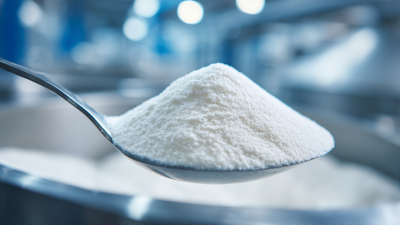
Comparative Analysis of Nonionic Polyacrylamide Versus Other Polymer Options in Industry Applications

Ava
-

Phone
-

E-mail
-

Whatsapp
-

WeChat
Jessy Lin
Paul Zhou:8613356391894 Eric Wong:8615963245439Emily Wu:8617866856171
-
WeChat
Paul Zhou

-
WeChat
Eric Wong

-
WeChat
Emily Wu